Best Futures Contracts for New Prop Traders
The best futures contracts for new prop traders in 2026: MES, MNQ, MGC and MCL specs, tick values, micro vs mini sizing and firm-by-firm contract limits.

By Marcel Hambálek · Senior Trader, For Traders
The best futures contracts for new prop traders are the micro E-minis — Micro E-mini S&P 500 (MES), Micro E-mini Nasdaq-100 (MNQ), Micro Gold (MGC) and Micro Crude Oil (MCL) — because they combine deep liquidity with a tick value small enough to survive a trailing drawdown. One micro is exactly one-tenth of its mini equivalent, so 10 MES equals 1 ES in notional exposure, and that ratio is what decides whether your evaluation is survivable.
Key takeaways
- Start on micros: MES ($1.25 per tick) gives you the same S&P 500 exposure profile as ES ($12.50 per tick) at one-tenth the risk per tick.
- 10 micro contracts = 1 mini contract in notional exposure — identical trade, different granularity, different commission bill.
- Contract choice is a drawdown problem first: on a 50K evaluation with a $2,000 trailing drawdown, 1 ES needs only 160 ticks against you to end the account; 1 MES needs 1,600.
- Prop firm contract limits are not the same thing as exchange margin — most firms cap you well below what margin alone would allow, and some hard-block the order while others count it as a rule violation.
- Liquidity beats volatility for a new trader: tight spreads and clean fills on ES/MES, NQ/MNQ, GC/MGC and CL/MCL matter more than range.
- Futures roll on a quarterly March/June/September/December cycle — plan the roll inside your evaluation window instead of discovering it on expiry day.
Watch: related video
Quick guide: the five futures contracts to start with
Start with MES (Micro E-mini S&P 500), add MNQ (Micro E-mini Nasdaq-100) once you're comfortable, then layer in MGC (Micro Gold) and MCL (Micro Crude Oil). Treat M2K (Micro Russell 2000) and MYM (Micro E-mini Dow) as optional add-ons, not day-one contracts. That's the order most new prop traders should follow, and there's a reason it's not "trade whatever's moving today."
The starter shortlist, in order
These are the most popular futures contracts for active traders on CME Group, and for good reason — they're the deepest micro books available, which means tighter fills and less slippage when your stop actually gets hit.
| Contract | Underlying | Tick value | Best for | What it punishes |
|---|---|---|---|---|
| MES | S&P 500 | $1.25/tick | Learning session structure, low-drama trending days | Overtrading chop during lunch hours |
| MNQ | Nasdaq-100 | $0.50/tick | Momentum and breakout setups | Wide stops — ATR swings punish undersized accounts fast |
| MGC | Gold | $1.00/tick | Macro-driven trends, safe-haven flows | Holding through news without a plan |
| MCL | Crude Oil | $1.00/tick | Inventory-report volatility, session breakouts | Gaps and overnight risk if you're not flat |
| M2K / MYM | Russell 2000 / Dow | $0.50 / $0.50 per tick | Diversifying correlation once MES/MNQ feel repetitive | Thinner books, less forgiving fills |
Why this order and not "trade what's moving"
Chasing whatever instrument had the biggest range yesterday is how new traders end up with a contract they don't understand and a drawdown they can't explain. The order above is built on three things: liquidity, tick granularity relative to daily range, and session coverage. MES has the tightest spread-to-range ratio of any micro, so a bad entry costs you less in real terms than the same mistake on MNQ or MGC. MNQ's tick value is smaller in dollars but its range runs hotter — great once you've calibrated your stop sizing, brutal if you haven't. MGC and MCL both react to scheduled macro events (Fed decisions, EIA inventory data), which means their volatility is more predictable in timing even if it's sharper in magnitude. That predictability is a teaching tool, not a shortcut.
What a new prop trader should ignore for the first 90 days
Skip the full-size E-mini and mini contracts entirely — the notional exposure isn't sized for an evaluation account, full stop. Ten MES contracts equal one ES in exposure, and that ratio is exactly what keeps your risk survivable during a trailing drawdown. Also skip M2K and MYM until MES and MNQ feel repetitive; their thinner books make fills less predictable, which is the last thing you want while you're still building consistency. And ignore any contract you can't name the tick value of from memory — if you don't know it cold, you're not ready to size a position in it.
Picking the right contract is only half the equation. The other half — which firm's contract limits actually let you trade MES or MNQ the way you're planning to — is what the rest of this guide covers next.
Contract specifications: tick size, tick value and point value
Tick size is the smallest price move a contract can make; tick value is what that move is worth in dollars; point value is the multiplier that scales the whole contract. Confuse any of these three and your position sizing math falls apart before you've even placed the order. MES moves in 0.25-point ticks worth $1.25 each. MCL moves in $0.01 ticks worth $1.00 each. Same concept, completely different numbers — which is exactly why you check the spec sheet instead of assuming.
Here's the reference block worth bookmarking. Every number below is per single contract, not per lot of ten or a hundred.
| Contract | Symbol | Exchange | Tick Size | Tick Value | Point Value | Typical Session (ET) |
|---|---|---|---|---|---|---|
| Micro E-mini S&P 500 | MES | CME | 0.25 pt | $1.25 | $5/pt | Sun 6pm–Fri 5pm, nearly 24hr |
| Micro E-mini Nasdaq-100 | MNQ | CME | 0.25 pt | $0.50 | $2/pt | Sun 6pm–Fri 5pm |
| Micro E-mini Dow | MYM | CBOT | 1 pt | $0.50 | $0.50/pt | Sun 6pm–Fri 5pm |
| Micro E-mini Russell 2000 | M2K | CME | 0.10 pt | $0.50 | $5/pt | Sun 6pm–Fri 5pm |
| Micro Gold | MGC | COMEX | 0.10 pt | $1.00 | $10/pt | Sun 6pm–Fri 5pm |
| Micro WTI Crude Oil | MCL | NYMEX | $0.01 | $1.00 | $100/pt | Sun 6pm–Fri 5pm (daily pause) |
| Micro Euro FX | M6E | CME | 0.0001 | $1.25 | $12,500/pt | Sun 5pm–Fri 5pm |
| Micro Bitcoin | MBT | CME | $5.00 | $0.50 | $0.10/pt | Sun 6pm–Fri 5pm |
Micro E-mini index contracts: MES, MNQ, MYM, M2K
This is the core of most micro e-mini contract specifications discussions, and the MES vs ES tick value comparison is the clearest way to internalize the scale-down: ES ticks at $12.50, MES at $1.25 — exactly one-tenth. Same ratio holds for MNQ against NQ, MYM against YM, and M2K against RTY. Ten micros equal one mini in notional exposure and in dollar risk per tick, which is the whole reason these exist for evaluation accounts.
Commodities and metals: MGC, MCL and their full-size parents
COMEX Gold (GC) ticks at $10 per 0.10 point; MGC ticks at $1.00 for the same move — one-tenth again. MCL against full-size CL follows the identical pattern: $10 per tick on CL, $1.00 on MCL. Crude's tick value looks small in dollars but the $100/point multiplier means a bad NFP or inventory-report gap can move your account fast — size accordingly, not by feel.
Currency and crypto: 6E, M6E and MBT
The Micro Euro M6E ticks in 0.0001 increments worth $1.25 — one-tenth of the standard 6E contract's $12.50 tick. Micro Bitcoin MBT is the outlier on this list: it ticks in $5.00 increments worth only $0.50, because point value is tied to a fraction of one BTC rather than a round dollar multiplier. Don't assume crypto futures scale like index futures — they don't.
How to read a spec sheet before you place the first order
- Find tick size first — the minimum price increment the exchange allows.
- Find tick value — what one tick is worth in your account currency.
- Multiply tick value by the number of ticks in a full point to get point value — this is your dollar-per-point risk multiplier.
- Cross-check your stop distance in points against point value before sizing, not after.
Specs change — CME Group has adjusted margin and multiplier details before, and it will again. Confirm current specs directly on CME Group before you size anything, especially if you're reading this well after August 2026.
Micro vs mini: when 10 micros beat 1 mini
10 micro contracts equal 1 mini contract in notional exposure — always, by design. That's not a rule of thumb, it's the CME Group's stated multiplier for every micro/mini pair. The question that actually matters for your evaluation isn't whether they're equivalent — it's whether the ten smaller pieces or the one bigger block gets you to a funded account with your account intact.
The 10:1 rule stated plainly
Take the MES vs ES tick value as the cleanest example. One E-mini S&P 500 (ES) point is worth $50. One Micro E-mini S&P 500 (MES) point is worth $5. Trade 10 MES contracts and a 1-point move costs or pays you exactly what 1 ES contract would — $50. Same notional, same directional exposure, same dollar swing on the underlying move. What changes is the granularity you're allowed to work with in between.
Where granularity actually earns its keep
Splitting your size into micros pays off in three specific situations:
- Partial exits. You can't scale out of 1 mini contract — it's all or nothing. With 10 micros, you can bank 3 at your first target, trail 4 behind structure, and hold 3 for a runner. That's a real R:R management tool, not a nice-to-have.
- Small accounts where 1 mini exceeds 1R. On a $25K evaluation, a single ES contract's stop-out risk can blow past your entire per-trade risk budget before price even reaches your stop. Micros let you size to the account instead of sizing to the contract.
- Building into a level. Scaling in with 2-3 micros as price confirms a zone, rather than committing full size on the first touch, is a legitimate way to average your entry without betting the whole position on one candle.
Where trading 10 micros is just a bigger commission bill
If you're not scaling out, not scaling in, and not size-constrained by account rules, 10 micro round-turns simply cost more than 1 mini round-turn — you're paying commission on ten fills instead of one for an identical position. This is the trap: traders reach for micros out of habit or comfort, then trade them exactly like a single block anyway, quietly bleeding extra commission with zero added control. If your plan is one entry, one stop, one target — take the mini or the equivalent single fill, not the fragmented version.
The 25K account case: sub-1R sizing
Here's where the split isn't optional. On a $25K account with a 1% per-trade risk cap ($250), 1 ES contract with a 10-point stop risks $500 — double your ceiling before you've placed the trade. Drop to MES and that same 10-point stop risks $50 per contract, letting you size to 5 contracts for $250 of risk — precisely 1R, no compromise. This is the core reason micro futures prop firm structures dominate smaller evaluation tiers: the contract itself, not just discipline, has to fit the account.
| Scenario | Better fit | Why |
|---|---|---|
| Scaling out at 2+ targets | 10 micros | Enables partial exits at each level |
| $25K–$50K account, tight risk cap | Micros | 1 mini often exceeds 1R alone |
| Building into a support/resistance zone | Micros (scale-in) | Averages entry without full commitment upfront |
| Single entry, single stop, single target | 1 mini | Lower total commission for identical exposure |
| MNQ partial exit example: 6 contracts, exit 2/2/2 | Micros | Impossible to replicate with 1 NQ contract |
Contract size vs trailing drawdown and daily loss limit
The contract you pick decides how many ticks of room you actually have before a trailing drawdown or daily loss limit ends your evaluation — and that number is often smaller than traders assume. One ES future against a typical $2,000 trailing drawdown gives you roughly 160 ticks of breathing room. One MES against the same $2,000 gives you 1,600 ticks — ten times the room, because the micro's tick value is one-tenth the mini's.
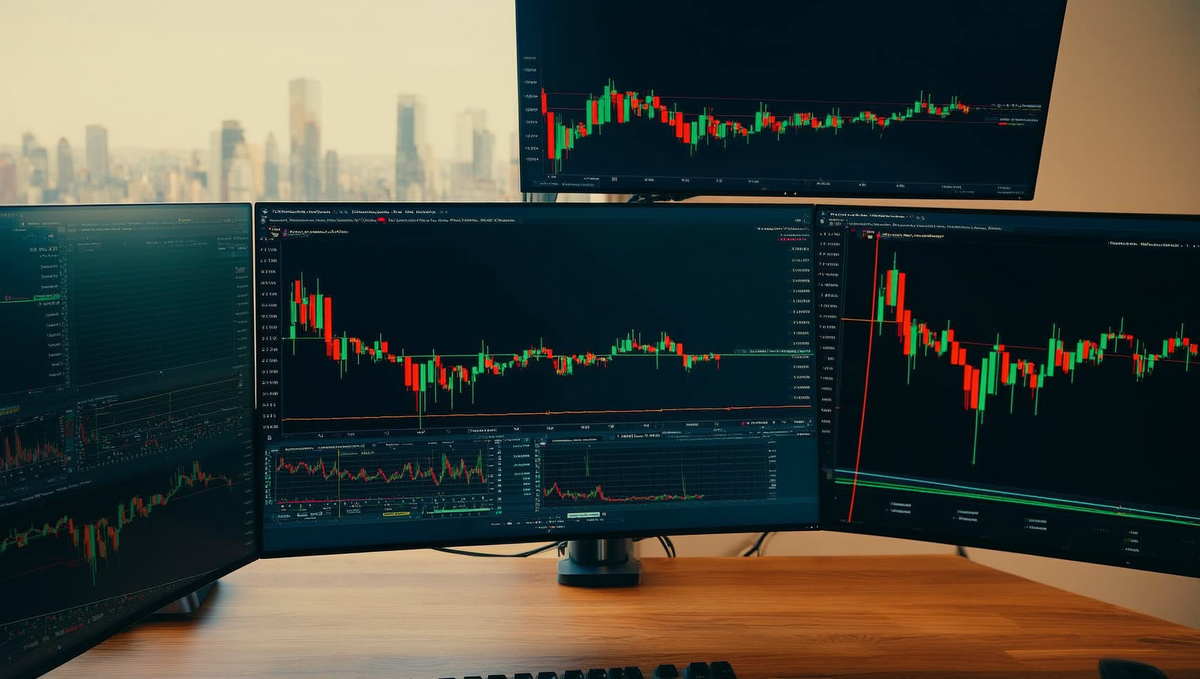
Ticks-to-blow-up: the number that decides your contract
"Ticks-to-blow-up" is simply your trailing drawdown divided by the tick value of the contract you're holding. ES pays $12.50 per tick; MES pays $1.25. A $2,000 trailing drawdown survives 160 adverse ticks on 1 ES, but 1,600 on 1 MES. Do the same math on MNQ ($0.50/tick) and MGC ($1.00/tick) and the nominal room looks huge — thousands of ticks. But nominal room and real room aren't the same thing once you factor in ATR and average daily range: MNQ regularly moves 600–1,000 ticks in a session on Nasdaq volatility days, which chews through that "big" cushion far faster than the tick value alone suggests. This is the core risk management gap most contract-selection guides skip.
Worked math on 25K, 50K and 100K evaluations
Using representative trailing drawdown and daily loss limit figures across common evaluation sizes, here's how ticks-to-breach scales by contract and account:
| Account size | Typical trailing DD | 1 ES (ticks) | 1 MES (ticks) | 1 MNQ (ticks) |
|---|---|---|---|---|
| 25K evaluation | $1,500 | 120 | 1,200 | 3,000 |
| 50K evaluation | $2,000 | 160 | 1,600 | 4,000 |
| 100K evaluation | $3,000 | 240 | 2,400 | 6,000 |
Notice ES's own daily range (roughly 40 points, or 160 ticks) sits almost exactly on top of its 50K breach threshold — one bad session in a single ES contract can end the evaluation outright. Micros give you the same market exposure sliced into units small enough that a normal daily range doesn't threaten the whole account on one contract.
How a trailing drawdown moves against you intraday
A trailing drawdown doesn't sit still — it ratchets up behind your unrealised equity high, not your starting balance. Open a position, let it run into profit, and your maximum drawdown level climbs with it in real time. Give back that open profit without closing the trade, and you can breach the limit while your account is still "in the green" relative to where you started the day. This is where most new futures prop traders get caught: they're watching account balance, not the trailing line quietly climbing behind their unrealised high.
Sizing to the daily loss limit, not to the account balance
Max position size on any futures prop firm evaluation should be derived from the daily loss limit, not the headline account balance — the daily limit is what actually stops you out mid-session. Use:
Max contracts = (daily loss limit × per-trade risk fraction) ÷ (stop distance in ticks × tick value)
Example:
Ready to trade funded capital?
Choose your path — Instant Accounts, One-Step or Two-Step Challenges — from just $23, with up to $300,000 in funded capital.
Choose your challengeFutures prop firm contract limits: firm-by-firm comparison
Futures prop firm contract limits cap the number of micro or mini contracts you can hold at once on an evaluation, and they vary by firm, account size, and phase — separate from CME's own day-trading margin requirements. Two accounts with identical balances can have wildly different max position sizes depending on which firm issued the rulebook, so "what's the biggest account?" is the wrong question. "What's the max contracts on this specific size?" is the one that keeps you funded.
| Firm | Typical account size checked | Illustrative max micro contracts | Illustrative max mini contracts | Oversized order handling |
|---|---|---|---|---|
| For Traders | $50K evaluation | Scales with phase and instrument | Scales with phase and instrument | Platform-side block on most instruments |
| Topstep | $50K Trading Combine | Contract cap by account tier | Contract cap by account tier | Hard block at the API level |
| FTMO | $50K futures evaluation | Cap tied to margin schedule | Cap tied to margin schedule | Violation flagged, reviewed post-trade |
| FundedNext | $50K futures challenge | Cap tied to account tier | Cap tied to account tier | Mix of platform block and rule review |
| FXIFY | $50K futures evaluation | Cap tied to account tier | Cap tied to account tier | Violation logged, action at firm discretion |
| The 5%ers | $50K futures account | Cap tied to account tier | Cap tied to account tier | Violation logged, action at firm discretion |
Treat the numbers above as illustrative, not gospel — every one of these firms publishes an updated rulebook and margin schedule, and the max position size futures prop firm rules change more often than most traders check. Before you fund an account on any of them, pull the current PDF.
For Traders
For Traders runs multi-asset futures challenges (Two-Step and Instant Funding) where micro contract exposure scales with account size and phase. What we don't offer: a standalone "unlimited micro" tier — position sizing is rule-bound like every serious firm on this list, because that's what protects the simulated capital pool and, ultimately, your payout eligibility.
Topstep
Topstep built its name on the Trading Combine and is one of the best-known futures prop trading firms for e-mini contracts specifically. Its contract caps are enforced at the platform/API level — you generally can't submit an oversized order at all, rather than submitting it and getting flagged after the fact.
FTMO
FTMO's futures product is newer than its FX/CFD evaluation and ties contract limits to its margin schedule per instrument. Violations here tend to surface as a post-trade review rather than a pre-trade block, which matters for how forgiving a fat-finger order is.
FundedNext, FXIFY and The 5%ers
All three are active in the micro futures prop trading account space with tiered account sizes and contract caps that step up with balance. Enforcement mechanics differ by instrument and platform (NinjaTrader vs proprietary), so a rule that's hard-blocked on one symbol may be a logged violation on another within the same firm.
Hard-blocked orders vs rule violations
A hard block stops the oversized order from filling at all — the platform rejects it before it reaches the exchange. A rule violation lets the order fill, then flags it in a post-trade review, which can mean disqualification even though the trade executed and possibly won. This distinction is why "the platform let me place it" is not the same as "it was allowed" — read the rulebook's enforcement language, not just the numeric cap.
Scaling plans: how limits change after you pass
Every firm on this list raises contract limits after you pass and prove consistency on a funded account — that's the scaling plan. The typical pattern is a percentage step-up in max position size tied to a rolling profit target over a set number of sessions or months, not a one-time unlock. Consistency, not a single lucky week, is what moves you from micro-only sizing to running minis.
A contract limit and a CME day-trading margin requirement are two different guardrails. Margin, set by the exchange and referenced at cmegroup.com, tells you what your account can mathematically support. The firm's contract limit tells you what's permitted under that specific evaluation's rules — and the rulebook is almost always the tighter constraint of the two.
This article is published by For Traders. We've featured our own futures challenge alongside Topstep, FTMO, FundedNext, FXIFY and The 5%ers because the comparison is genuinely relevant to a trader shopping for the best futures prop firm micro contracts setup — not because we're pretending to be neutral. Contract limits and enforcement mechanics change with rulebook updates; verify the current numbers directly with each firm before you fund an account.
Liquidity first: the most liquid and most popular futures contracts
Rank contracts by liquidity before you rank them by anything else — including how exciting the daily range looks. A tight, deep order book is what lets you get filled at the price you clicked, and inside an evaluation with a hard daily loss limit, that difference is the whole game.
What liquidity buys you at the fill
Liquidity isn't an abstract concept — it's the gap between what you clicked and what you got. In a deep market, your stop gets filled a tick or two from the trigger. In a thin one, a single sell order can walk price through three or four levels before it finds a buyer, and that gap comes straight out of your account. Slippage on a stop-out doesn't just cost you a bad fill once — it compounds every time you're wrong, and in a 30-trade evaluation sample, two extra ticks per stop-out on a thinly traded contract can be the difference between passing and busting on the last day.
The volume hierarchy: ES, NQ, CL, GC and their micros
The most liquid futures contracts on CME Group's board haven't changed much in years — they've just gotten more micro volume layered on top. E-mini S&P 500 (ES) and E-mini Nasdaq-100 (NQ) sit at the top of the index stack, trading hundreds of thousands of contracts a session with spreads that stay one tick wide through most of the US day. WTI Crude Oil (CL) and COMEX Gold (GC) run right behind them — both deep enough to absorb size around the open, both prone to thinning out overnight or right before inventory data.
The micros — MES, MNQ, MCL, MGC — now carry enough of their own standalone volume that they're not just "ES for small accounts" anymore; during regular US hours they trade a tight one-tick spread of their own. That's the most popular futures contracts for active traders lineup in 2026: deep at the core, and deep enough in the micro wrapper to trade real size without moving your own fill.
| Contract | Typical liquidity profile | Where it thins out |
|---|---|---|
| ES / MES | Consistently tightest spread, highest volume of the group | Rarely — even overnight session holds up |
| NQ / MNQ | Very deep during RTH, slightly wider than ES | Pre-market gaps around big tech earnings |
| CL / MCL | Deep around NYMEX open and EIA inventory | Late overnight, ahead of OPEC headlines |
| GC / MGC | Solid through COMEX hours | Asian session, thin around FOMC |
Why volatility is the wrong first filter
A wide daily range looks like opportunity on a chart — it's what draws new traders to CL or to crude spread plays before they've earned the screen time. But range without depth is just slippage waiting to happen. A contract that moves 200 ticks a day but costs you two ticks of slippage on every stop is quietly taxing every single trade you take, win or lose. Pick your first contract for the tightness of its book, not the size of its swing — the range will still be there once you can actually trade it without paying a toll on every fill.
Should a new prop trader touch gold futures?
Yes — but as your second or third contract, not your first, and specifically the micro version. Micro Gold futures (MGC) give you real exposure to the most-traded instrument on the For Traders platform without the tick value that turns a bad afternoon into a blown evaluation.
MGC vs GC: the 10:1 split in metals
COMEX Gold (GC) represents 100 troy ounces of gold per contract. Micro Gold (MGC) represents 10 troy ounces — exactly one-tenth, the same ratio you already know from MES vs ES. That ratio is the whole story: 10 MES contracts equal 1 ES in notional size, and 10 MGC contracts equal 1 GC. Trade MGC until your risk sizing is second nature, then scale toward GC only when your account size actually calls for it.
| Spec | Micro Gold (MGC) | COMEX Gold (GC) |
|---|---|---|
| Contract size | 10 troy oz | 100 troy oz |
| Tick size | $0.10/oz | $0.10/oz |
| Tick value | $1.00 | $10.00 |
| Typical daily range (ticks) | 150–250 | 150–250 |
| Approx. daily range in $ per contract | $150–$250 | $1,500–$2,500 |
Gold's range problem — and why it's still worth learning
Gold trading is rarely quiet. A 200-tick day is unremarkable, and that's exactly the trap for a trader coming from smaller-tick-value instruments — the same move that's a manageable $200 swing on one MGC contract is a $2,000 swing on one GC contract, before slippage. The range itself isn't the risk. Sizing for the range is. Learn MGC's rhythm — its Asia lull, its London build, its New York volatility spike — on the contract where a full daily range costs you a couple hundred dollars, not a couple thousand.
Coming from XAUUSD: what changes when you move to futures
If your gold experience is spot XAUUSD on a CFD account, three things flip the moment you move to MGC or GC:
- No swap. Futures carry no overnight financing charge — your cost is built into the spread and commission, not a daily rollover fee that erodes a held position.
- Exchange-cleared, not broker-quoted. Every fill on MGC runs through CME's central clearing — there's no dealing-desk price, no requote risk tied to a single counterparty.
- Quarterly expiry. XAUUSD never expires; MGC and GC roll on a quarterly cycle (Feb, Apr, Jun, Aug, Oct, Dec). You need to know your contract month and roll date, or you'll find yourself holding a position into declining liquidity.
Margin structure changes too — futures margin is exchange-set and can move with volatility, unlike the fixed leverage ratios most CFD gold trading uses.
One caution worth repeating out loud: gold gets genuinely dangerous during the London-to-New York overlap and around FOMC prints. Spread widens, range expands fast, and a stop that felt comfortable on a quiet Asia session gets tagged and blown through in seconds. Trade MGC through those windows with size you'd be fine losing twice.
Rollover and expiry: don't let the calendar break your evaluation
Every futures contract has a death date, and if you're still holding it when the exchange settles, you're not trading anymore — you're at the mercy of a process you didn't choose. Index futures, gold, and most metals run a quarterly rollover and expiry cycle. Crude runs monthly. Miss the roll and you either get auto-flattened by your platform, stuck in a rule breach, or filled at a spread that's three times normal width. None of those outcomes help you pass an evaluation.
The March / June / September / December cycle
MES, MNQ, ES, NQ, and MGC all follow the March June September December cycle — contract months coded H (March), M (June), U (September), Z (December). The front month is whichever of those is currently trading closest to expiry; once volume shifts, the next quarterly contract becomes front month. MCL is the outlier: crude expires monthly, so if you're trading micro crude you're checking the calendar twelve times a year, not four.
When to roll: volume, not the expiry date
Don't wait for the last trading day to figure out you're in the wrong contract. Watch volume. In the week or two before contract expiry, liquidity migrates from the expiring front month into the next quarterly contract, and there's a crossover point where the new contract's volume overtakes the old one. That crossover — not the calendar date — is your signal to roll. Trade the expiring contract past that point and you're trading a shrinking order book, which means wider spreads and worse fills, especially on micros where depth is thinner to begin with.
| Contract | Cycle | Roll watch window |
|---|---|---|
| MES / ES, MNQ / NQ | Quarterly (H, M, U, Z) | ~5-8 trading days before expiry |
| MGC / GC | Quarterly-ish, plus extra months | ~1-2 weeks before expiry |
| MCL / CL | Monthly | ~3-5 trading days before expiry |
What happens to an open position during an evaluation
Check your platform's evaluation rules before you ever hold a position into expiry week — most prop firms won't let physically-settled contracts run into settlement at all. Typical outcomes are auto-liquidation at whatever price the system grabs, a forced-flat that can print outside your intended exit, or a straight rule breach that ends your challenge regardless of the P&L sitting in the trade. None of those is a risk worth taking for a position you could've rolled cleanly two days earlier.
The practical rule is simple: roll on the volume crossover, be flat in the expiring contract before the last trading day, and never carry a position into settlement while an evaluation is live. Set a calendar reminder for expiry week the same way you'd flag an FOMC or NFP print — it's a known event, so treat it like one instead of discovering it the hard way mid-drawdown.
Contracts to avoid, and how to scale from micros to minis
Skip anything with thin volume, wide ticks relative to your daily loss limit, or gap risk you can't manage overnight — and don't touch a new contract size until you've proven the same edge across a defined stretch of trading days. The fastest way to blow an evaluation isn't bad analysis, it's picking an instrument whose mechanics fight your risk management before you've even placed a trade.
What a beginner should not trade in year one
Leave these alone until you've got a funded account and real screen time behind you:
- Thin agricultural and softs markets — contracts like lumber, orange juice, or the smaller grain months trade with spreads that widen fast when volume dries up. You'll get filled at prices you didn't ask for.
- Wide-tick contracts relative to your daily loss limit — if one tick move eats 10-15% of your daily loss limit, you have no room for a normal pullback. Full-size Crude Oil (CL) or full ES before you've sized down are classic examples of this trap for a small account.
- Overnight-gap-prone products — anything that reacts hard to news outside RTH (cattle on USDA reports, NatGas on inventory data) can gap through your stop. A stop order doesn't protect you from a gap; it just tells you where you got filled after the fact.
- Low-volume micro months — even micros go quiet in the back months. Trade the front, liquid contract only, and confirm volume before you size in, not after.
None of this is about being timid. It's about matching contract limits and instrument behavior to a risk management plan that has to survive a max DD rule, not just a good week.
The three consistency conditions before you upsize
Don't scale on a feeling. Scale on evidence. Before adding a single contract, you want:
- A minimum run of trading days — at least 20-30 sessions in the size you're currently trading, not three good days in a row.
- A stable average R per trade — your average result per trade shouldn't be swinging wildly session to session. Consistency in R is what tells you the edge is repeatable, not lucky.
- Max drawdown well inside your limit — if your worst stretch is already eating half your daily loss limit at current size, you're not ready to add contracts. You're ready to tighten up.
Scaling without changing the risk profile that got you funded
When you do scale, scale contract count — not stop distance, not position size per trade beyond the plan. If MES at 1 contract with a 12-tick stop got you funded, going to 2 contracts with the same 12-tick stop doubles your dollar risk in direct, measurable proportion. Widening the stop to "give it more room" changes the R:R that actually worked, and now you're trading a different system without realizing it.
The practical version: size your challenge to the contracts you actually intend to trade funded. If your plan is MNQ day trading margin micro futures at 2-3 lots, don't evaluate on a size or instrument you'll abandon the day you get funded — build the scaling plan around the exact position sizing you'll run for real.
Ready to trade funded capital?
Choose your path — Instant Accounts, One-Step or Two-Step Challenges — from just $23, with up to $300,000 in funded capital.
Choose your challengeMicros vs minis: the honest trade-off
Pros
- Micros give you 1/10th the risk per tick, which turns a 2,000 trailing drawdown from 160 ticks of room into 1,600
- Granular sizing lets you scale in and out and keep every trade under 1R on a 25K evaluation
- MES, MNQ, MGC and MCL all carry enough volume for clean fills at retail size
- You can build the same notional exposure as a mini whenever you want — 10 micros, one decision
Cons / risks
- Ten round-turn commissions on micros cost more than one on the mini equivalent
- Micro order books thin out faster in illiquid sessions and during roll week
- Some firms count contracts, not notional — 10 micros may hit a contract limit that 1 mini would not
- Small tick values can encourage over-trading because each loss feels survivable
Frequently Asked Questions
What are the best futures contracts for new prop traders?+
MES (Micro E-mini S&P 500), MNQ (Micro E-mini Nasdaq-100), and MGC (Micro Gold) are the best starting points for new prop traders because they combine deep liquidity with small tick values that keep risk per contract manageable. MES ticks at $1.25 and MNQ at $0.50, so a few ticks of slippage won't wreck your daily loss limit while you're still learning entries and exits. Gold's MGC gives you exposure to the instrument that dominates volume on platforms like For Traders without the size of a full GC contract. Start with one of these, master position sizing, then diversify.
Micro vs mini futures — when should a new trader switch?+
The switch point is when your win rate and average R:R have been stable across at least 30-50 trades on micros, not when your account balance simply grows. Ten micro contracts (like MES) and one mini (ES) carry roughly the same notional exposure and tick value, so the trade itself doesn't change — only your ability to size cleanly does. Some prop firms cap contract count during evaluations, so scaling into minis early can actually reduce your flexibility. Stay in micros until sizing errors, not fear, are your only remaining problem.
How many futures contracts can I trade on a prop evaluation?+
Contract limits vary by firm and account size — For Traders, Topstep, FTMO, FundedNext, FXIFY, and The 5%ers each publish their own max position tables tied to your evaluation tier, typically scaling from a handful of micros on a 25K account up to several minis on 100K+ accounts. These caps exist independent of your broker margin requirement — you might have margin available for more contracts than the firm's rules allow. Always check the specific contract limit table for your account size before placing a trade, since exceeding it can void your evaluation regardless of the outcome.
What are tick sizes and values for common micro futures?+
MES ticks in 0.25-point increments worth $1.25 each, MNQ ticks 0.25 points worth $0.50, MYM (Micro Dow) ticks 1 point worth $0.50, M2K (Micro Russell) ticks 0.10 points worth $0.50, MCL (Micro Crude) ticks 0.01 worth $1.00, and MGC (Micro Gold) ticks 0.10 worth $1.00. These small tick values are exactly why micros suit new prop traders — a five-tick stop-out on MES costs $6.25 per contract, not the $62.50 of a full ES contract. Know these numbers cold before you size a single trade.
Why does liquidity matter more than volatility for beginners?+
Liquidity determines your fill quality and slippage, while volatility only determines how much the price moves — and a highly volatile but thin contract will chew up your risk through bad fills before the move even plays out. MES, MNQ, and MGC sit among the most liquid contracts on the CME, meaning tight bid-ask spreads and fills close to your intended price even during fast markets like NFP or FOMC. A new trader chasing a volatile but illiquid micro contract can lose an evaluation to slippage alone, never mind a wrong directional call.
Should new prop traders trade gold futures (GC/MGC)?+
Yes, MGC is a solid instrument for new prop traders given gold's status as the most-traded asset across many prop platforms, but size it deliberately since gold's ATR can run wider than equity index micros on news days. Start with MGC rather than full-size GC to keep your per-tick exposure at $1.00 instead of $10.00 while you calibrate stop placement around gold's typical daily range. Treat FOMC and CPI days with extra caution — gold's volatility spikes hard around macro data, and a stop sized for a quiet session won't hold.
How do you roll a futures contract during an evaluation?+
Rolling means closing your position in the expiring contract and opening an equivalent one in the next active month, ideally done a few days before expiry when volume shifts to the new contract — most platforms show open interest crossing over as your signal. During a prop evaluation, treat the roll like any other trade: it counts against your daily loss limit and trailing drawdown, so don't roll into a wider spread near expiry when liquidity in the old contract is thinning. Check your firm's rules — some restrict trading in the final days before expiry entirely.
What margin do micro futures actually require to trade?+
Micro futures typically require broker day-trading margin in the range of $50-$300 per contract depending on the instrument and volatility regime, far less than the $1,000-$12,000 range for full-size contracts. This margin figure is separate from a prop firm's contract limit — you might have enough margin in a live account to hold 20 MES contracts, but your evaluation rules might cap you at 5. Always check both numbers before sizing a trade, since the firm's rule is what actually governs your evaluation, not your broker's margin availability.
Which futures contracts should a beginner avoid?+
Avoid thinly-traded contracts and full-size contracts with high tick values before you've proven consistency on micros — think full-size crude oil (CL), full-size gold (GC), or niche agricultural and interest rate futures with wide spreads and low retail volume. A single adverse tick on CL costs $10, and on GC it's $10 as well, which can blow a daily loss limit in seconds if your stop is even slightly mis-sized. New prop traders are better served sticking to MES, MNQ, and MGC until position sizing and rule discipline are automatic, then expanding from there.
Written by
Marcel Hambálek
Senior Trader, For Traders
Marcel trades Futures and Forex day-trading setups on funded accounts and writes about the executional details most traders skip — order types, slippage, session timing, platform quirks on MT5 and NinjaTrader. Pragmatic, mechanics-first, no fluff.
Follow on LinkedInReady to trade funded capital?
Choose your path — Instant Accounts, One-Step or Two-Step Challenges — from just $49, with up to $300,000 in funded capital.
Choose your challengeTrade up to $300,000
Choose challenge