Is Prop Trading a Good Career Path?
Is prop trading a good career path in 2026? The two real routes, honest earnings ranges, pass-rate odds and a self-scoring fit checklist before you commit.

By Marcel Hambálek · Senior Trader, For Traders
Prop trading can be a good career path in 2026, but only for a specific type of person — and there are two very different doors. The institutional desk route pays a salary plus bonus and demands quant skills, a degree and a hiring cycle you may never get through. The online prop firm route is open to anyone with a challenge fee, pays performance rewards on simulated capital via a profit split, and has a failure rate most firms would rather not discuss. Neither is passive income.
Key takeaways
- There are two prop trading careers in 2026 — an institutional/quant desk seat and an online prop firm evaluation — and they share almost nothing except the word "prop".
- Institutional desks pay base plus bonus with a hiring funnel most retail traders can't enter; online prop firms pay a profit split on simulated capital with no salary, no benefits and no floor.
- Evaluation pass rates are low industry-wide, and the traders who survive are separated by risk discipline and drawdown management, not by strategy edge.
- Prop trading works part-time — the London/New York overlap plus higher-timeframe structures let you trade around a job or school, and part-timers often manage max DD better than screen-watchers.
- Crypto prop is the odd one out: 24/7 markets, weekend gaps and funding rates change both the risk profile and the realistic earning pattern.
- Before quitting anything, pressure-test the career on simulated capital — a challenge is the cheapest way to find out if your edge survives rules and a live-market clock.
Watch: related video
The Short Answer: Yes, But Only For a Specific Type of Person
Is prop trading a good career path? Yes — if you're process-driven, can sit out when there's no edge, and don't need daily validation to keep showing up. If you need certainty, a steady paycheck, or a quick win to feel okay about your week, the honest answer is no, and you'll save yourself money and time by hearing that now instead of after your third failed challenge.
Why the honest answer has two halves
A prop trading career splits into two routes that share a name and almost nothing else. The proprietary trading firm desk — Jane Street, Citadel Securities, Optiver — is a competitive hiring funnel with a salary floor, a bonus structure, and a filter of degrees, quant tests, and interview rounds most applicants never clear. The online prop firm route, like a For Traders Trading Challenge, is open access: pay the fee, pass the evaluation on simulated capital, get a performance-only ceiling with no base salary and no guarantee you'll ever see a payout. One route pays you to show up. The other pays you only when you perform. Knowing which door you're walking through changes every decision downstream — how you size risk, how you budget, how you judge success.
Who this career actually suits
- Process-driven traders who follow a plan rather than a feeling — same entry criteria, same risk per trade, whether it's a Tuesday or an NFP print.
- People comfortable being wrong repeatedly. A 40% win rate with solid R:R beats a 70% win rate with no risk control, and you need to believe that on your tenth losing trade, not just in theory.
- Traders who can sit out. No setup some days. No trade. That's a skill, not a symptom of laziness.
Who should walk away now
- Anyone needing daily validation. Markets don't reward you on a schedule. Some weeks you do everything right and still hit your daily loss limit.
- Revenge-traders. If a loss makes you want the next trade bigger, faster, angrier — that's the single fastest way to blow an account, funded or not.
- Anyone treating a payout as a bill payment. The moment rent is riding on this month's performance rewards, you'll oversize, override your stop, and break the process that got you funded in the first place.
Weigh the full set of prop trading pros and cons before you commit a challenge fee or a resume to either door — neither route is passive income, and both punish inconsistency faster than any salaried job ever will. A desk job tolerates a slow quarter. A challenge account doesn't tolerate a slow week past your drawdown limit.
How Do Prop Firms Work? The Mechanics in Plain English
A proprietary trading firm puts capital — real, on a firm balance sheet, or simulated, on a demo environment — behind traders it has screened, and shares the resulting performance through a profit split. That's the whole model. Everything else — evaluations, drawdown limits, payout schedules — is just the plumbing that makes that one sentence work at scale.
Where the capital comes from
In the institutional version, capital sits on the firm's own balance sheet. A risk officer sets position limits, a desk head signs off on strategy, and the trader draws a salary while trading the firm's money directly — no challenge, no fee, just a hiring process that filters for quant skills and a track record.
In the online model — the one most people mean when they ask how do prop firms work — you pay an evaluation fee to trade a simulated capital account on a demo environment. Hit the profit target inside the rules, and you move to a funded account, still simulated, but now eligible for real payouts tied to your trading performance. No firm capital is at risk during the evaluation. That's the trade-off for the low barrier to entry.
Why the rules exist: max drawdown and daily loss limit
The maximum drawdown and daily loss limit aren't arbitrary hoops — they're the screening mechanism. A firm can't sit across the desk and interview 50,000 applicants, so it lets the account rules do the filtering. Anyone whose loss distribution can blow through a 10% max DD or an 5% daily limit gets excluded automatically, before a single dollar of real payout risk exists. It's a proxy for the psychological trait the firm actually wants: can you survive a losing streak without doubling down. The rule is blunt, but the thing it's measuring is real.
Profit split and payout cycles
The prop trader profit split is how the firm converts simulated performance into an actual payout — commonly 80/20 or better in the trader's favor once funded, paid out on a set cycle (weekly, biweekly, or monthly depending on the firm). These aren't "profits" in the brokerage sense — they're performance rewards calculated against your simulated trading results and paid from the firm's revenue, not from a segregated client account. If you breach a rule, the account resets or closes, and depending on the firm's policy, you either retry with a new fee or lose the attempt entirely.
How the firm makes money
Challenge fees are not incidental — they're a core part of how the online model is funded. A firm with a high evaluation failure rate collects fees from the majority who don't pass, and pays performance rewards to the minority who do. That's not a scandal, it's the business model, and it's the same reason casinos, gyms, and insurance all work: the aggregate math has to favor the house for the product to exist at all. What you give up in exchange: no salary, no benefits, no equity or capital ownership — just a shot at rewards on capital that was never yours to begin with.
Institutional Prop Desk vs Online Prop Firm: The Head-to-Head
Short answer: an institutional prop desk pays you a salary to trade the firm's balance sheet and demands a degree, a network, and a hiring cycle most people never crack; an online prop firm charges you a fee to prove you can trade, then pays you a slice of simulated performance rewards on capital you never had to raise yourself. Different capital, different risk-bearer, different door.
| Factor | Institutional Prop Desk | Online Prop Firm |
|---|---|---|
| Capital source | Firm's own balance sheet | Simulated/demo capital, firm-funded after passing |
| Pay structure | Base salary + discretionary bonus | Profit split on performance rewards (often 80–90%) |
| Entry barrier | Degree, interviews, hiring cycle, often relocation | Challenge fee, no CV screen, open to anyone |
| Who bears the loss | The firm | The firm (on the funded account), you lose the fee if you fail evaluation |
| Benefits | Health insurance, PTO, equity in rare cases | None — you're not an employee |
| Career optionality | Path to portfolio manager, risk desk, buy-side | Scale up account size, but no corporate ladder |
Capital, pay structure and who bears the risk
On an institutional desk, the risk sits with the firm — you're trading their book, and a bad month costs you your bonus, not your rent. In the online model, the risk during evaluation sits with you (the challenge fee), but once you're funded, drawdown on the simulated account is the firm's exposure, not yours. That's the trade-off: no salary safety net, but also no boss capping your upside at a discretionary bonus number.
Entry barrier: hiring funnel vs challenge fee
Prop firm jobs at banks and established desks route through campus recruiting, referrals, and multi-round interviews that filter hard on pedigree — this is the world of Chicago trading desks and market-maker training programs where a math or CS degree is table stakes. The online prop firm route skips all of that: pay the fee, pass the evaluation, get funded. It's a meritocracy of P&L, not resume.
What a physical trading floor actually gives you
What the floor gives you that no evaluation platform can replicate is density — mentorship density, specifically. You're three seats from a trader who's seen five crashes, and when you size a position wrong, someone corrects you in real time, before the mistake compounds. You see order flow, you absorb market-maker vs prop desk dynamics by osmosis, and the firm's infrastructure — data feeds, execution, compliance — is built for you, not by you.
What remote evaluation trading gives you instead
What you get instead: speed. No relocation, no hiring cycle, no waiting for a desk to open a headcount. You control your own strategy end to end, and you can start this week. The catch is you carry the entire learning curve solo — no seat-mate, no desk head reviewing your risk before it blows up. This gap is exactly why the online model exists at this scale: after the 2008 crisis, the Federal Reserve-enforced Volcker Rule restricted banks from proprietary trading with their own capital, and bank prop desks shrank or closed. The talent and appetite for prop trading vs retail trading careers didn't disappear — it moved into the challenge-based model that fills the vacuum the Volcker Rule created.
What Prop Traders Actually Earn: The Ladder, Stage by Stage
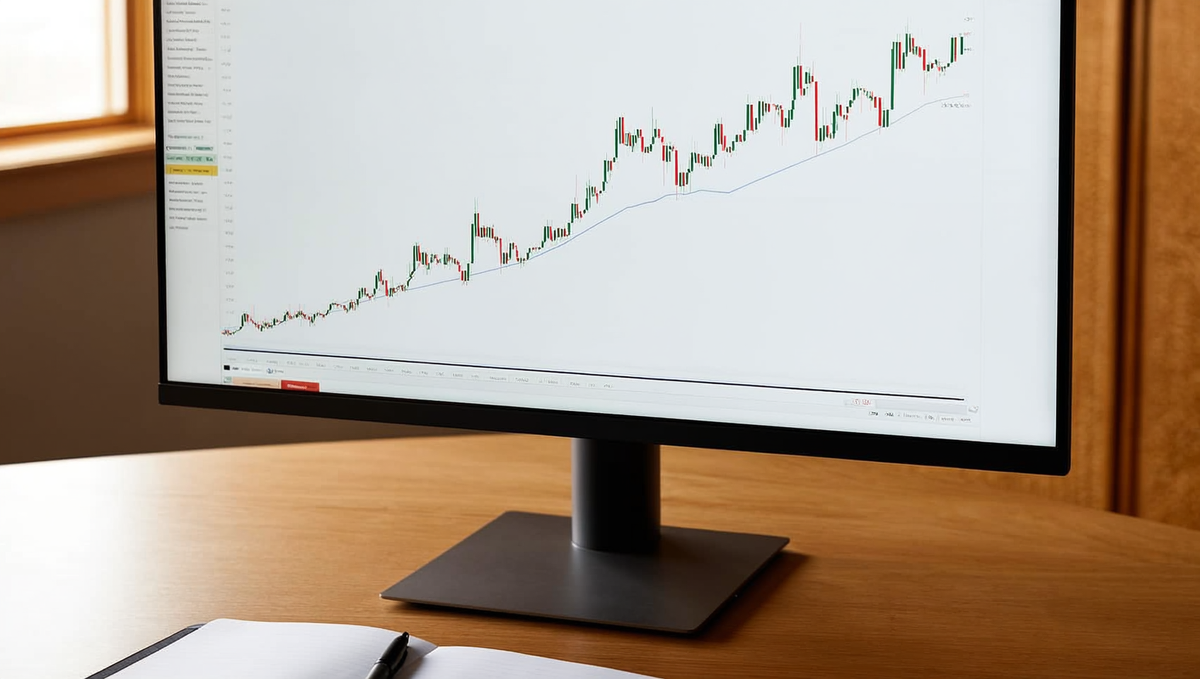
There's no single "prop trader salary" — earnings depend entirely on which door you walked through, and at what stage of the ladder you're standing. An institutional junior gets a paycheck whether the desk has a good month or not. An online challenge trader gets a percentage of simulated profit and nothing else. Both call themselves prop traders. Only one of them has a floor.
| Stage | Route | Typical Range | Structure |
|---|---|---|---|
| 1. Junior desk seat | Institutional | $60K–$90K base + bonus | Salary + PnL-linked bonus, deferred vesting |
| 2. Senior desk trader | Institutional | $150K–$400K+ total comp | Small base, bulk from PnL bonus, subject to clawback |
| 3. First funded account | Online challenge | $0 base, 70–90% profit split | Performance rewards on simulated capital only |
| 4. Scaled account | Online challenge | Payouts scale with account size | Consistent months trigger capital scaling |
Stage 1: junior desk seat — base plus bonus
You land a junior seat at a bank or proprietary trading firm after a brutal interview cycle — quant screens, mental math under pressure, maybe a summer internship that converts to an offer. Base salary lands somewhere in the $60K–$90K range in most financial centers, with a bonus tied to how the desk's book performs that year. The bonus isn't yours the moment it's declared — it's frequently deferred over 2-3 years and can be clawed back if the desk gives back gains later.
Stage 2: senior desk trader and PnL-linked comp
Five to ten years in, the base barely moves but the bonus multiplier does. Senior traders on a strong desk can see total comp in the $150K–$400K+ range, with the bulk directly linked to book PnL. The catch: risk limits tighten as size grows, and a single bad quarter can erase two good ones — clawback clauses exist specifically because banks got burned by traders who took a bonus on gains that later reversed.
Stage 3: first funded account and first performance reward
On the online route, there's no base, no vesting schedule, no HR department. You pass a challenge, get a funded account trading simulated capital, and your first performance reward arrives as a slice of that month's simulated profit — commonly a 70-90% profit split in your favor. Do the arithmetic on a $50K funded account: a solid month at 4% gain is $2,000 in simulated profit; at an 80% split, that's a $1,600 reward. A rough month with a single day hitting your daily loss limit produces exactly $0.
Stage 4: scaled simulated capital and consistent payouts
Consistency over several cycles can push you toward account scaling — more simulated capital allocated, same split, bigger absolute rewards. This is where crypto prop firm careers and multi-asset funded programs start looking like real income: not because any single month is huge, but because the base you're splitting against keeps growing.
Why headline numbers mislead: clawbacks, drawdown resets and variance
A "six-figure trader" headline usually averages twelve months, four of which were flat or negative. Variance is the part nobody puts in the recruiting deck — a trader who nets $120K across a year might have strung together three losing months in the middle of it, surviving only because the risk framework kept losses inside the daily loss limit and max drawdown. Judge any earnings claim, institutional or online, by the worst stretch it survived — not the best month it produced.
The Honest Odds: Evaluation Pass Rates and What Survivors Do Differently
Most traders who fail a prop firm evaluation don't fail because they read the market wrong — they fail because they broke a risk rule while chasing a losing position back to breakeven. Industry-wide, prop firm evaluation pass rates sit in single digits to low double digits depending on the provider and challenge type, and attrition doesn't happen once — it compounds at every stage of the funnel.
Think of it as four gates, not one: passing phase one, passing phase two, surviving the first month on a funded account without tripping the daily loss limit or max drawdown, and then — the gate almost nobody talks about — reaching a second and third payout instead of blowing the account back up once real reward money is on the table. Each gate thins the herd. A trader who clears phase one comfortably can still get bodied in phase two by a single revenge trade after NFP. A trader who gets funded can still give it all back in week three chasing a green month.
Where traders actually fail — and it isn't entries
Pull apart any failed evaluation and the entry signal is rarely the problem. The postmortem almost always reads the same: oversized lot on a "high conviction" setup, no stop moved to give it room, or a full day's risk budget spent on one trade instead of spread across three or four. Ask "is prop trading worth it" and the honest answer is: it's worth it for the trader who treats risk management and position sizing as the actual skill being tested — not the entries.
The real cost of repeated attempts
Resets aren't free, and they aren't just money — they're time with zero income to show for it. Three resets on a mid-size challenge is real cash out of pocket for someone earning nothing from trading yet, and it's also three cycles of psychological reset: rebuilding confidence, rebuilding discipline, right back at the start. If you're resetting more than once with the same mistake in the postmortem, the fix isn't a bigger account next time — it's smaller size this time.
Six habits separating the minority who stay funded
- Fixed fractional position sizing — risk a flat percentage per trade, not a flat lot size, so a string of losers shrinks stakes automatically.
- A personal daily stop set well inside the firm's actual daily loss limit — not at the edge of it.
- No new positions opened inside NFP or FOMC volatility windows unless the strategy is specifically built to trade the release.
- A hard max drawdown ceiling treated as sacred, not as a target to graze.
- A journaled review cycle — every trade logged, every rule break flagged, weekly review non-negotiable.
- The discipline to leave a stop where it was placed. We've all moved a stop hoping price comes back — the data says it usually doesn't.
Prop Trading Around a Job or School: The Part-Time Route
Yes — part-time prop trading around a job or school works, and honestly, it's the route most traders actually take even though nobody writes about it. The trick isn't finding more hours. It's picking the one window your schedule already gives you and building your entire approach around that window instead of fighting it.
Choosing a session you can actually be present for
Before and after school prop firm trading only works if you're honest about your calendar. If you're done with lectures or your shift by 17:00 local, the New York session is your market — it opens as your day winds down. If you're up and free at 07:00 before class or work starts, London open hands you the volatility instead. There's no "best" session in the abstract. There's only the session that overlaps with the two or three hours you can genuinely sit at the charts without half-attention, a phone buzzing with Slack messages, or a professor calling on you mid-trade.
The London/New York overlap and why it does the heavy lifting
If your schedule gives you any flexibility at all, aim it at the London/New York overlap — roughly 13:00 to 16:00 GMT. This window concentrates a disproportionate share of daily volatility in XAUUSD and US100 into three hours instead of spreading it thin across twenty-four. A part-timer with ninety minutes free at lunch can genuinely trade this window and see enough range to make a plan work, where the same ninety minutes during the Asian session might give you nothing but chop.
Higher-timeframe and set-and-forget structures
Zero screen time doesn't mean zero opportunity — it means a different structure. Set-and-forget works like this: mark your entry off a clean structural level, place your stop at 1.5× ATR beyond that structure rather than the obvious round number (round numbers get hunted first), pre-set your target, and walk away. No babysitting the trade through a meeting. Swing setups on the 4H or daily chart suit this rhythm better than a 5-minute scalp ever will, because you're not required to watch the fill.
Why part-time traders often manage drawdown better
Here's the counterintuitive part: part-time traders often respect the daily loss limit better than full-time screen-watchers, simply because they physically can't overtrade. No screen time between 09:00 and 17:00 means no revenge trade after a stop-out. The trade-off is real, though — a slower feedback loop, a longer runway to competence, and genuine exposure to news-event whipsaws while you're stuck in a lecture or a meeting with no hand on the mouse.
| Your free window | Best-fit session | Structure to use |
|---|---|---|
| Before 09:00 | London open | Set-and-forget on 4H structure |
| 13:00–16:00 GMT | London/New York overlap | Intraday XAUUSD / US100 with tight ATR-based stops |
| After 17:00 | New York session | Swing entries held into next session |
| Fragmented, no fixed block | Daily chart only | Pure set-and-forget, no intraday monitoring |
Ready to trade funded capital?
Choose your path — Instant Accounts, One-Step or Two-Step Challenges — from just $23, with up to $300,000 in funded capital.
Choose your challengeCrypto Prop Trading as a Career: Different Market, Different Economics
Crypto prop trading can be a viable career path, but the economics are structurally different from FX or index trading — the market never closes, funding rates create carry trades that don't exist elsewhere, and the reward curve is lumpier, with long flat stretches followed by high-expectancy windows. If you're building a career around it, you're managing a different risk profile than a forex or gold trader, even if the challenge mechanics look similar.
24/7 markets and the weekend-gap problem
There's no close to hide behind. In FX or futures you can go flat Friday and reset Monday with a clean head. Crypto trades 24/7, including weekends when liquidity thins out and a handful of large orders can move price several percent with no warning. A position sized fine on Thursday's volume can blow through your daily loss limit while you're asleep Saturday night. Traders who move from FX to crypto prop and keep their FX position sizing are the ones who get flagged for max drawdown breaches in week one — not because their read was wrong, but because they sized for a market that closes and traded one that doesn't.
Funding rates, basis and where the edge sits
Crypto perpetual futures charge or pay a funding rate every 8 hours to keep the perpetual price tethered to spot — and the basis (the gap between futures and spot) tells you which side of that trade is crowded. When funding runs hot and positive, longs are paying shorts, and that's a structural mean-reversion signal you simply don't get trading EUR/USD or gold futures. Some of the more consistent crypto prop traders build their whole edge around basis and funding — carry trades, cash-and-carry arbitrage logic, fading extreme funding prints — rather than pure directional calls. It's a genuinely different skill set from reading a 4H trend on XAUUSD.
How crypto earning patterns differ from FX and index desks
Crypto volatility clusters harder than FX or index volatility. You get weeks of chop where nothing works, then a regime shift — a liquidation cascade, a funding flip, a macro headline — where expectancy spikes and a well-positioned trader captures three months of "normal" reward in a session. That's the upside. The downside is the same clustering can wreck a max DD limit in one bad weekend gap if you're sized for the calm regime. Treating crypto prop as monthly income is harder than treating FX that way — the variance is real, and smoothing it requires tighter risk control, not looser.
This is exactly why the Crypto Challenge exists as its own track rather than a bolt-on to FX evaluations — it's built for traders who already live in this market and understand funding rates and weekend gap risk as everyday variables, not edge cases. If you're weighing crypto prop firm careers and earning potential against a forex or index desk, go in knowing the discipline bar is higher, not lower. The 24/7 clock punishes casual position sizing faster than any five-day market ever will.
Skills, Tools and Certifications That Actually Matter in 2026
The skills that matter depend entirely on which door you're walking through — institutional desks reward quant literacy and credentials in the hiring funnel; online prop firms reward measurable edge and risk discipline, full stop. Confusing the two wastes months.
Technical skills: market analysis, expectancy, R-multiples, Python
If you're asking how to become a prop trader in 2026 on the institutional side, quantitative trading Python is close to table stakes now. Desks want you comfortable pulling data, building a research workflow, backtesting with pandas or a proprietary stack, and speaking the language of statistics — Sharpe, drawdown distributions, factor exposure. You don't need to be a developer, but you need to read and modify code, not just admire dashboards.
On the online challenge route, none of that is required. What matters instead is expectancy and R-multiple discipline: knowing your average win in R, your average loss in R, and your win rate well enough to know if your system is even worth trading before you risk simulated capital on it. A trader with a 0.3 expectancy and consistent 1% risk per trade will outlast someone with a "gut feel" 60% win rate every single time a 10-trade losing streak shows up — and it will show up.
Personal skills: emotional discipline, adaptability, continuous learning
Both routes share this layer, but the pressure looks different. On a desk, adaptability means adjusting to new mandates, new risk limits, new instruments your book gets assigned. On the challenge route, it means not revenge-trading after breaching half your daily loss limit on a NFP spike. Emotional discipline isn't a personality trait you either have or don't — it's a practiced response to drawdown, built the same way you'd build a habit: repetition under real (or simulated) stakes.
CFA and FRM — route-specific, not baseline
CFA and FRM certifications open doors in institutional hiring — they signal you can survive a rigorous, standardized body of knowledge, and recruiters filter on them. They do almost nothing for you in an online funded-account context. No challenge provider checks your credentials before you pass an evaluation on simulated capital, and no funded payout is bigger because you hold a CFA charter. Treat certifications as a hiring-funnel tool for one specific route, not a universal career requirement.
What is genuinely noise
Indicator collections, private signal groups, and paid mentor Discords promising a guaranteed pass rate are noise — they sell certainty in a game that has none. So are over-optimised backtests curve-fit to look flawless on five years of data and fall apart in month one live. The one non-negotiable across both routes: a documented, repeatable process you can evaluate over a sample size, not a feel for the tape. Risk management is the skill that survives every market regime; everything sold as a shortcut around it usually isn't.
A Day and a Month in the Life of a Working Prop Trader
A prop trading career, stripped of the marketing, looks like a repeatable workflow: a pre-market checklist, hard rules during the session, and a monthly review that either confirms your edge or tells you to stop trading it. Nobody shows you this part in the ads. It's also the part that separates traders still funded in month twelve from the 90%+ who don't make it past their first evaluation.
The pre-market routine that actually changes outcomes
Before the session opens, you check the economic calendar for FOMC and NFP — not to predict the number, but to know whether you should be flat or sized down going into it. You mark levels on XAUUSD and US100, the two instruments that dominate volume on most prop platforms, so you're reacting to a plan instead of a chart in real time. Then — and this is the step most retail traders skip — you calculate position size backwards from your daily loss limit, not from how confident you feel about the setup. If your daily loss limit is $500, that number determines your max size before you even look at the trade. Conviction sizes accounts into breach; the loss limit sizes accounts into month two.
During-session rules: the trades you don't take
The edge in a funded account often comes from the trades you decline, not the ones you take. Working prop traders run session rules like:
- A hard cap on trades taken per session — three to five, not "however many setups appear."
- No adding to losers, ever — a losing position doesn't get bigger, it gets closed.
- No new risk after two consecutive stop-outs — you step away, not double down to "get it back."
These aren't suggestions. They're the mechanical version of discipline, built so you don't have to rely on willpower at 2pm when NFP just printed against you.
The monthly review: journal, expectancy, drawdown reset
Every trade gets logged the same session it closes: entry, exit, R-multiple, and — critically — the written reason you took it. A screenshot without reasoning is useless a month later; you won't remember if you took the trade because of your plan or because you were bored.
At month-end, the trading journal and review process is where a prop trading career actually gets built. You're calculating expectancy across the full sample — not cherry-picked winners — and looking at win rate against average R separately, because a 40% win rate with 2.5R winners beats a 65% win rate with break-even trades every time. You identify which setups carried the account and which ones quietly bled it, and you cut the bleeders. After a losing month, the reset isn't emotional — it's a fixed rule: smaller size, fewer trades, until the equity curve confirms the process still works.
This is the part of the job that looks like a job. It's also exactly why most people who try prop trading as a career quit before they see it pay off.
Prop Trading Pros and Cons: The Honest Ledger
Pros
- Access to firm or simulated capital far larger than most retail accounts, without risking your own savings beyond the fee
- Higher buying power translates a modest percentage return into a meaningful performance reward
- Pay is tied directly to performance through a profit split — no politics, no waiting your turn
- Structured trader development: max drawdown and daily loss limits force the risk discipline most retail traders never build
- Location-independent on the online route, and testable around a job or school before you commit
- Advancement is based on profitability, not tenure — capital scaling can happen fast if you're consistent
Cons / risks
- Constant performance pressure; a single bad session can end an account regardless of a strong prior month
- Hard drawdown limits mean a correct thesis with poor sizing still ends the run
- No base salary, no benefits, no pension and no paid time off on the online route
- High evaluation failure rates industry-wide, and repeated attempts get expensive
- Significant mental and emotional load — income volatility affects sleep, relationships and decision quality
- Limited career mobility; a solo funded-account record transfers poorly outside trading
Ready to trade funded capital?
Choose your path — Instant Accounts, One-Step or Two-Step Challenges — from just $23, with up to $300,000 in funded capital.
Choose your challengeFrequently Asked Questions
Is prop trading a good career path in 2026?+
Prop trading can be a solid career path in 2026, but only for traders who treat it as a skills business, not a lottery ticket. The upside is real: no cold-calling clients, no asset-gathering, just capital access tied to performance rewards once you pass an evaluation. The downside is equally real — most people who attempt a challenge don't pass, and income is variable, not salaried. It suits self-directed, risk-disciplined people who can handle drawdown periods without a base income cushioning them. It's a poor fit if you need structure, benefits, or guaranteed pay.
How do prop firms work?+
Prop firms provide traders access to simulated capital through a paid evaluation, and once passed, traders receive a funded account and earn performance rewards from simulated profits. You pay a one-time challenge fee, hit profit targets while respecting a daily loss limit and max drawdown, then trade a demo-funded account under the same rules. The firm's revenue comes mainly from challenge fees (most attempts fail) plus a split of the funded trader's simulated gains. It's not a broker relationship — no real capital changes hands during the evaluation itself.
What's the difference between an institutional prop desk and an online prop firm?+
An institutional prop desk employs you directly with a salary, uses the firm's actual balance sheet capital, and typically requires a finance background or quant pedigree to get hired. An online prop firm like a Two-Step Challenge provider has no employment relationship — you pay an evaluation fee, trade simulated capital, and earn performance rewards if you pass and stay funded. Institutional desks offer benefits, mentorship, and a career ladder; online challenges offer accessibility, lower barriers to entry, and remote flexibility but no salary or job security.
How much do prop traders realistically earn?+
Earnings range from zero (the majority who bust a challenge or funded account) to six figures for consistent funded traders scaling account size over time. Junior seats at institutional desks may start with modest salaries plus a performance cut, while online funded traders keep a high split — often 80-90% — of simulated profits with no base pay. Realistic first-year earnings for someone passing a challenge are modest until account size scales through consistent performance rewards. Survivorship matters more than any single payout figure — most traders never see a payout at all.
Is prop trading worth it given the failure rate?+
It's worth it if you treat the challenge fee as tuition for a repeatable process, not as a bet on a lucky month. Failure rates on evaluations commonly sit in the 90%+ range industry-wide, which reflects undisciplined risk-taking more than the difficulty of the rules themselves. The traders who pass usually treat the fee as cheap compared to risking real capital while they refine entries, position sizing, and daily loss limits. If you're gambling challenge attempts hoping for a lucky run, it's not worth it — if you're using them to pressure-test a tested strategy, it usually is.
Can you trade prop part-time around school or a job?+
Yes, part-time prop trading is common — many traders run challenges before or after school or around a 9-to-5, since most rules don't require constant screen time. XAUUSD and index setups on higher timeframes, or set-and-forget swing entries, fit a part-time schedule better than scalping requires. The key constraint is the daily loss limit and time-in-trade rules, not clock hours, so you can plan sessions around London or New York opens without quitting your day job. Progression is slower part-time, but it removes the pressure of trading scared with no income backup.
What are crypto prop firm careers like, and what do they pay?+
Crypto-focused prop firm careers work the same evaluation-to-funded-account model as forex or indices challenges, just applied to crypto futures and often with higher volatility parameters. Pay is entirely performance-based through simulated profit splits — there's no salary — so earning potential scales with how well you manage crypto's wider swings and weekend gaps. A Crypto Challenge typically demands tighter risk control than gold or forex because ATR-based moves are larger, meaning position sizing discipline matters more than raw win rate. Realistic earners are traders who already understand crypto market structure, not newcomers chasing volatility.
What are the advantages of working at a traditional prop trading firm?+
Traditional prop desks in major financial hubs offer direct mentorship, institutional-grade tools, real capital exposure, and a defined career ladder from junior trader to senior risk-taker. You get colleagues to bounce ideas off during volatile sessions, structured risk oversight, and often a base salary while you build a track record. The tradeoff is a steep hiring bar — usually finance credentials or a strong quant background — and less schedule flexibility than remote prop challenges. Online prop firms remove the hiring bar and geographic requirement but replace the salary and mentorship with self-directed evaluation and simulated capital.
What are the biggest downsides of a prop trading career?+
Income volatility is the biggest downside — there's no base salary, no benefits, and payout months can be followed by drawdown months with zero performance rewards. The mental load compounds this: managing a daily loss limit and max drawdown rule under real psychological pressure is harder than backtesting suggests. Skills built trading gold or indices on a funded account don't always transfer cleanly to institutional hiring, since online prop trading rarely counts as formal industry experience. Anyone considering this path should test it on a demo or a low-cost challenge before treating it as a primary income source.
Written by
Marcel Hambálek
Senior Trader, For Traders
Marcel trades Futures and Forex day-trading setups on funded accounts and writes about the executional details most traders skip — order types, slippage, session timing, platform quirks on MT5 and NinjaTrader. Pragmatic, mechanics-first, no fluff.
Follow on LinkedInReady to trade funded capital?
Choose your path — Instant Accounts, One-Step or Two-Step Challenges — from just $49, with up to $300,000 in funded capital.
Choose your challengeTrade up to $300,000
Choose challenge