How to Stay Calm Under Pressure in Prop Trading
How do prop traders manage stress? Risk numbers, a pre-committed daily stop, tilt triggers, event blackouts and a copyable pressure protocol for 2026 challenges.

By Lenka Rož Schánová · Operations & Risk, For Traders
Prop traders manage stress by engineering it out of the rules rather than talking themselves out of it: risking 0.5–1% per trade, pre-committing a daily stop of 2R, setting a session cut-off time, blacking out FOMC and NFP on XAUUSD, and running a fixed pre-market routine. The stress comes from the rule structure — daily loss limit, trailing max drawdown, target deadline — so the fix is structural, not motivational.
Key takeaways
- Prop trading stress is caused by three specific structures — the daily loss limit, the max or trailing drawdown, and the profit-target deadline — not by weak willpower.
- Risking 0.5–1% of the account per trade turns a normal losing streak into a non-event; at 0.5% risk, a 10% max drawdown absorbs roughly 20 consecutive losses.
- A pre-committed daily stop (2R or two losing trades, whichever comes first) plus a hard session cut-off time removes almost every revenge-trading decision before it happens.
- Tilt has physical and behavioural tells — moving stops, adding to losers, dropping to a lower timeframe — and the response is a flat position and a 60-second reset, not a bigger trade.
- XAUUSD is the most-traded instrument on For Traders and US indices are second, which is exactly where ATR expansion around FOMC and NFP kills evaluations; blackout windows are cheaper than conviction.
- A psychology journal logs pre-trade state, rule adherence and emotion at exit — not just entries and exits — so you can see the pattern that keeps costing you the challenge.
Watch: related video
The pressure protocol: what prop traders actually do, in order
How do prop traders manage stress? They don't manage it in the moment — they pre-commit eight parameters before the session starts, so there's nothing left to decide once P&L is moving. This is the core of any real trading discipline routine: the rule fires automatically, you don't negotiate with it. Here's the protocol, verbatim, the way it gets built into a trading plan.
The eight rules, with numbers
- Risk per trade: 0.5–1% of account balance. Trigger: every single entry, no exceptions for "high conviction" setups. This one number does more for emotional control in trading than any breathing exercise.
- Daily stop at 2R or two losses, whichever hits first. Trigger: cumulative loss on the day reaches 2R, or you've taken two losing trades — platform closed, no third attempt.
- Session cut-off time, written down before the session. Trigger: the clock, not your P&L. If your cut-off is 11:30am, you're flat at 11:30am whether you're up or down.
- Event blackout, 15 minutes before to 15 minutes after FOMC and NFP. Trigger: the calendar, checked at the start of the pre-market routine, not discovered mid-spread on XAUUSD.
- One instrument focus per session. Trigger: chosen before the open — gold, US100, one futures contract. Switching mid-session is itself a tilt tell.
- A 12–20 minute pre-market routine, same structure daily. Trigger: alarm or calendar block, not "when I feel ready." Same checklist every day removes the decision of whether to check it.
- A flat-and-reset trigger on the first tilt tell. Trigger: moved stop, doubled size, or entered without your setup criteria met — any one of these closes the position and ends the session.
- End-of-day journal entry with a state score. Trigger: session close, every day, win or lose — a 1–5 rating of your emotional state alongside the trade log.
Why every rule is pre-committed, never in-the-moment
Prop trading psychology has one structural fact working against you: the accounts themselves are built around a daily loss limit, a trailing max drawdown, and a target deadline. Those three constraints generate the pressure — so the fix has to live at the same structural level, not in willpower deployed after the pressure's already arrived. A decision made at 7am with a flat P&L and a clear head is reliable. The same decision, reconsidered at 2pm after two losses, isn't a decision anymore — it's a negotiation with yourself, and the version of you doing the negotiating is the one with the smallest account balance and the worst judgment of the day.
That's the whole logic behind risk per trade being fixed at 0.5–1% rather than "sized to conviction," and the daily stop being a number rather than a feeling. Every rule above only holds because it was written down before the session opened. The rest of this article walks each one through the same three steps: what it's actually diagnosing, the number that enforces it, and what to do instead of the impulse it's built to override.
Why prop trading feels more stressful than trading your own account
An evaluation adds hard external constraints your own account never had — every trade now gets measured against a loss limit and a clock, not just against your edge. On a personal account, a bad week just means less equity. In a prop firm challenge, a bad week can mean a breached rule, a failed account, and a sunk fee, which is a completely different kind of pressure even when the dollar amounts are smaller.
The three structures that create the pressure: daily loss limit, max drawdown, deadline
Three mechanics do almost all the psychological work here. The daily loss limit forces an intraday capitulation decision — hit -3% (or whatever your firm sets) and you're done for the day, no matter how good the next setup looks. That turns a normal losing streak into a forced stop, which feels like the market punishing you personally. The max drawdown creates a floor under your equity curve, and as you get closer to it, your perceived room to operate shrinks even if your position sizing hasn't changed at all. The target deadline converts what should be patient, selective trading into urgency — three weeks left and no progress toward the profit target makes marginal setups start looking like must-takes.
Trailing drawdown: why it punishes you for winning
A trailing drawdown is the one that catches people off guard, because it moves the floor up after every new equity high. Bank a big win and your max drawdown line rises with it — so instead of feeling relief, you feel the walls close in. Traders end up protecting an unrealized peak instead of trading their plan, which is backwards: winning should reduce pressure, not increase it. Understanding exactly how your firm calculates this — end-of-day vs. real-time, and against balance vs. equity — matters enough that it's worth reading in full in our guide to Daily Drawdown Rules: How to Stay Within Limits.
Does simulated capital make it easier? Not the way you'd think
Trading on simulated capital removes the financial sting — you're not risking real money in the market — but it keeps, and sometimes amplifies, the identity and sunk-cost sting. The challenge fee is real money already spent, and your self-image as a trader is on the line in a way that can feel heavier than the P&L itself. That's why prop trading challenge stress often shows up as harder on evaluations than on live accounts of similar size, even though the actual capital at risk is lower.
| Trigger | Common behaviour | Rule that overrides it |
|---|---|---|
| Down 2% intraday, market "about to turn" | Add size to average down | Daily stop fixed at 2R — flat when hit, no exceptions |
| New equity high after a strong week | Increase risk per trade to "lock in" progress | Position size stays 0.5–1% regardless of recent P&L |
| Ten days left, target not hit | Take lower-quality, higher-size setups | Pre-defined setup checklist — no checklist match, no trade |
| Approaching trailing drawdown floor | Stop trading entirely or revenge-trade to recover fast | Reduce size by half once within 1R of the floor, don't stop |
None of these overrides are motivational — they're structural, decided before the session opens. If staying inside these lines day-to-day is where you're losing the plot, our piece on How to Stay Consistent During Your Trading Challenge walks through building the routine that keeps you there.
Step 1: Size your risk so a losing streak can't move your heart rate
Risk 0.5–1% of your account per trade, sized off structure and ATR — not off how confident you feel about the setup. This single number does more for your stress levels than any breathing exercise. Get it wrong and every trade carries emotional weight it shouldn't; get it right and a string of losses becomes an afternoon, not an existential crisis.
0.5–1% per trade: the psychology argument, not just the maths
Most traders think of position sizing as a survival calculation — how many losses before the account is dead. That's true, but it's not the main point. The real reason 0.5–1% risk per trade works is that it keeps you in a physiological state where you can still think. At 3-5% risk per trade, a losing position triggers a genuine stress response — elevated heart rate, tunnel vision, the same fight-or-flight chemistry you'd get from a near-miss on the highway. That's the state where you move your stop "just a little," where you exit a winner early because you can't tolerate the open equity swing. Oversized risk doesn't just increase your max drawdown risk — it manufactures the exact stress that causes rule-breaking. Small risk per trade prop firm rules aren't there to slow down your growth; they're there to keep your nervous system out of the trade.
How many consecutive losses your risk setting survives
Run the streak arithmetic before you ever open a chart. It reframes a losing run from "something's wrong with me" to "this is week two of a known statistical range."
| Risk per trade | Losses to hit 10% max drawdown | Typical behavioural effect |
|---|---|---|
| 0.5% | ~20 in a row | Losses feel routine, decision-making stays clean |
| 1% | ~10 in a row | Manageable, occasional urge to "adjust" after 4-5 losses |
| 2% | ~5 in a row | Noticeable tension, stop-moving and hesitation appear |
| 3% | ~3-4 in a row | Three bad mornings from a failed evaluation — fight-or-flight kicks in |
At 0.5%, a 10% max drawdown ceiling absorbs roughly 20 consecutive losses — a run that almost never happens in practice, which is exactly why it feels safe. At 1%, you've got about 10 losses of runway, still comfortable. At 3%, you're three bad mornings from a failed evaluation, and that proximity to the edge is what turns normal variance into panic. Knowing how to handle drawdown emotionally starts with never being close enough to the wall to feel it breathing on your neck.
Position sizing off ATR instead of off gut feel
The sequence matters, and it only runs one direction:
- Mark your structural level (recent swing, order block, range edge).
- Set your stop at 1.5× ATR beyond that level — not on the round number, which gets hunted first.
- Calculate your dollar risk from your fixed risk % (0.5-1% of account equity).
- Derive lot size from the stop distance and the dollar risk — never the reverse.
If you size first and set the stop to "make the trade fit," you've built a position where your risk-reward ratio bends to your bias instead of the chart. ATR-based stops adapt to volatility automatically — tighter in quiet Asian sessions, wider around NFP — so your risk per trade stays consistent even when the market's behaviour changes underneath you.
Step 2: Pre-commit a daily stop and a session cut-off
Stop trading for the day at −2R or two losing trades, whichever comes first — and set that number well inside your platform's daily loss limit so you never get close to testing it. This one rule, written down before the session opens, does more for trading discipline than any amount of willpower once you're staring at a red account.
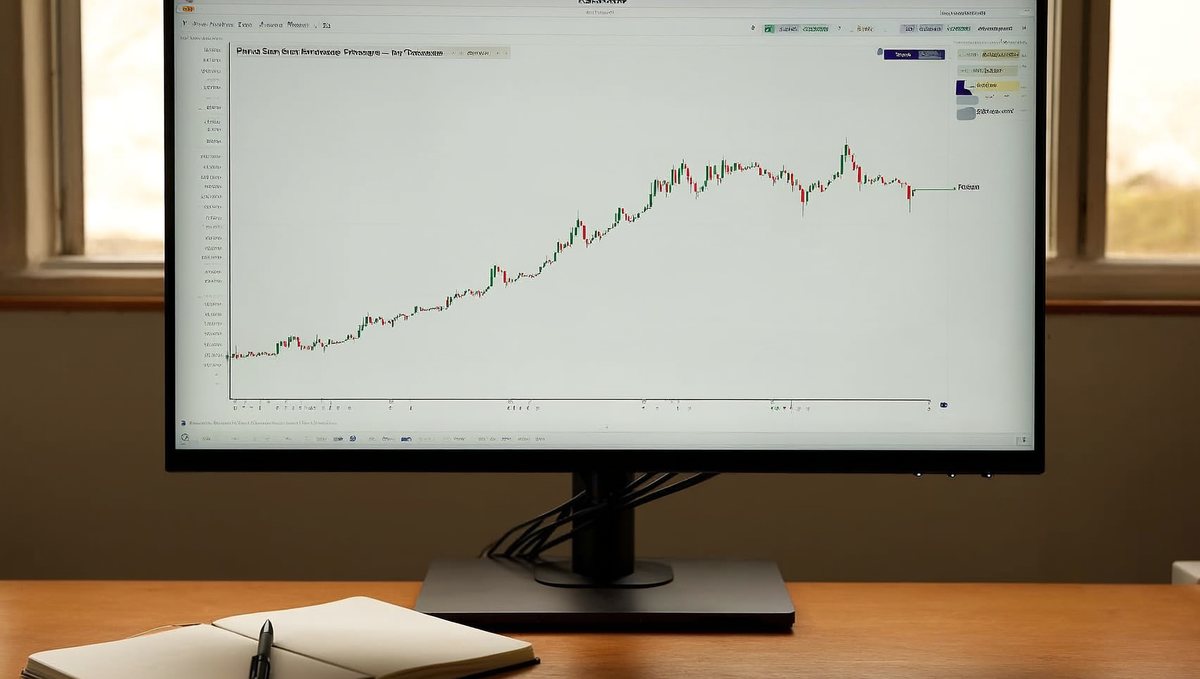
The 2R daily stop: how to set it and where to write it
Two losing trades at your normal 0.5–1% risk puts you at roughly −1.5R to −2R for the day. That's your ceiling — not the daily loss limit the platform enforces, but a line drawn well inside it. If your evaluation allows a 5% daily loss, your personal stop should trigger long before that, leaving margin for slippage and a bad fill. Write the number down before you open a single chart — on a sticky note, in your trading journal, as a platform alert if your broker or challenge dashboard supports it. The decision has to be made in the cold, calm state before the session, because nobody negotiates honestly with themselves after two losses in a row. That's not weakness — it's just how tilt works. The rule exists precisely for the moment you'd otherwise talk yourself out of it.
Session cut-off times that stop the 'one more trade' hour
Pick a fixed clock time — say, 11:30 New York for your session — after which no new positions open, full stop. Most challenge failures don't come from your A-setups; they come from the low-quality, tired trade taken an hour after your edge stopped showing up, when you're chasing the day back into green. A session cut-off removes the decision entirely. You're not asking "is this a good trade" at 11:45 — you're not even looking, because the window's closed. Build it into your trading discipline routine the same way you'd build a stop-loss into a position: non-negotiable, set in advance, not subject to in-the-moment renegotiation.
How to stop revenge trading in the 60 seconds after a stop-out
Revenge trading happens in the sixty seconds after a stop-out, not before — so that's the window you need a protocol for, not a mindset. The mechanics:
- Flat. Confirm no open positions, no pending orders.
- Hands off the mouse. Physically move away from the keyboard.
- Stand up. Change your physical state — tilt lives in the body as much as the head.
- Log the trade in your journal — entry, exit, reason, emotion. Not later. Now.
- No new order for a set number of minutes — five, ten, whatever you've pre-committed to. The clock, not your conviction, decides when you're allowed back in.
Full mechanics on managing the emotional side of this — including what tilt actually does to your decision-making — are covered in our Psychology Tips for Trading Under Pressure guide.
Step 3: Run a 12–20 minute pre-market routine
A pre-market routine for traders takes 12–20 minutes and should leave you with three things written down: today's economic events, two or three levels per instrument you're trading, and the maximum number of trades you're allowed to take. No routine, no clarity — you're improvising with real drawdown on the line. This is where trading discipline routine stops being a phrase and becomes a checklist with a clock running.
The timed checklist: news, levels, plan, state check
Run it in the same order every day. Order matters more than duration — you want the calendar checked before you're anywhere near a chart, not after you've already spotted a setup and gone looking for reasons to take it.
| Time block | Task | Output |
|---|---|---|
| 0–3 min | Check economic calendar, flag blackout windows (FOMC, NFP, CPI on XAUUSD and indices) | List of no-trade windows for the session |
| 3–8 min | Mark 2–3 levels per instrument, read current ATR against the 20-day average | Levels on chart + volatility context |
| 8–14 min | Write the if/then plan: if price does X at level Y, then entry is Z with defined stop | One-page trade plan, no ambiguity |
| 14–18 min | Confirm risk per trade (0.5–1%), daily stop in R, max trades allowed | Hard numbers, not a feeling |
| 18–20 min | Score your own state 1–10: sleep, mood, distractions | Go / reduce size / stand down decision |
Brett Steenbarger on preparation and anticipation
Trading psychologist Brett Steenbarger has made the point repeatedly: an anticipated event feels manageable, an unanticipated one feels like a threat. Your nervous system reacts to NFP very differently when you saw it coming three minutes ago on your calendar check versus when it blindsides you mid-trade. The routine's real job isn't the checklist itself — it's converting surprise into recognition. A trader who already knows CPI drops at 8:30am and has decided in advance not to touch XAUUSD for fifteen minutes either side isn't suppressing panic later. There's simply nothing to panic about; the decision was made in a calm state, hours earlier.
What to do when the routine says 'no trade today'
Be honest about the state score. Bad sleep, an argument before market open, coming down with something — any of that drags your score down, and the correct response is smaller size or a flat day, not pushing through on willpower. This isn't a failure of the routine. It's the routine working exactly as designed. The trader who skips a session because their 18–20 minute check flagged a 3/10 state is showing more discipline than the one who trades anyway and calls it commitment. Standing aside is a legitimate output of a pre-market routine for traders — arguably the most valuable one, since it's the day you'd otherwise have handed back your edge for free.
Ready to trade funded capital?
Choose your path — Instant Accounts, One-Step or Two-Step Challenges — from just $23, with up to $300,000 in funded capital.
Choose your challengeStep 4: Spot tilt early and run the 60-second reset
Tilt shows up in your behaviour before you feel it as an emotion — the moment you move a stop, add to a loser, or drop to a lower timeframe hunting for an entry that isn't there, you're already on tilt. That's the trigger, and the rule is simple: no new risk once you catch yourself doing it. Waiting until you "feel" calm again is too slow — by the time the emotion registers, you've usually already clicked the button.
Physical tells: heart rate, shallow breathing, leaning in
Before the behaviour, there's usually a body signal you're ignoring. Watch for:
- Held breath or shallow, rapid breathing as price approaches your stop
- Elevated heart rate you can feel without a wearable
- Jaw or shoulder tension
- Leaning in toward the screen, sitting forward instead of back
None of these are dangerous on their own. They're just data — early warning that your nervous system has shifted from monitoring to threat-response, which is exactly when execution quality drops.
Behavioural tells: moving stops, adding to losers, dropping timeframes
These are the ones that actually cost money, and they're the real definition of tilt in prop trading:
- Moving a stop further away "to give it room"
- Adding size to a losing position to lower your average
- Dropping from your plan's timeframe to a lower one to manufacture an entry
- Opening a chart or instrument you don't normally trade — XAUUSD scalps, a random alt, whatever's moving — because you want action, not a setup
That last one is fear of missing out trading in its purest form: FOMO is tilt's cousin, not a separate problem, and it gets the same response — stop taking new risk, full stop.
The 60-second reset
- Go flat first. Close or reduce, don't negotiate with the position.
- Breathe: four seconds in, six seconds out, for six cycles. The longer exhale is what drops heart rate — this isn't optional wellness fluff, it's mechanical.
- Stand up and look away from the screen for the full minute.
- Write one line naming the emotion: "angry, revenge-sizing" or "bored, forcing a trade." Naming it does more for emotional control in trading than any amount of self-talk.
Whether breathing, sleep and exercise actually matter
Be honest with yourself here: breathing changes your next 60 seconds, not your edge. Sleep and aerobic exercise measurably improve decision quality over days and weeks — that's real mental resilience trading is built on, not a wellness add-on. But none of it fixes bad position sizing. A trader risking 3% per trade who does breathwork is a calmer trader risking 3% per trade. Stress management for day traders works downstream of the rules in Step 1–3, never as a replacement for them.
Step 5: Blackout the events and instruments that actually kill accounts
The calm way to trade FOMC and NFP is simple: don't have a position on when they print. Build a blackout window — flat 15 minutes before the release, flat until 15 minutes after — and you remove the widest spreads, the ugliest fills, and the single-print drawdowns that wreck otherwise disciplined accounts. This isn't caution for caution's sake. It's how to trade calmly during news events when the market itself is temporarily un-tradeable at your normal size.
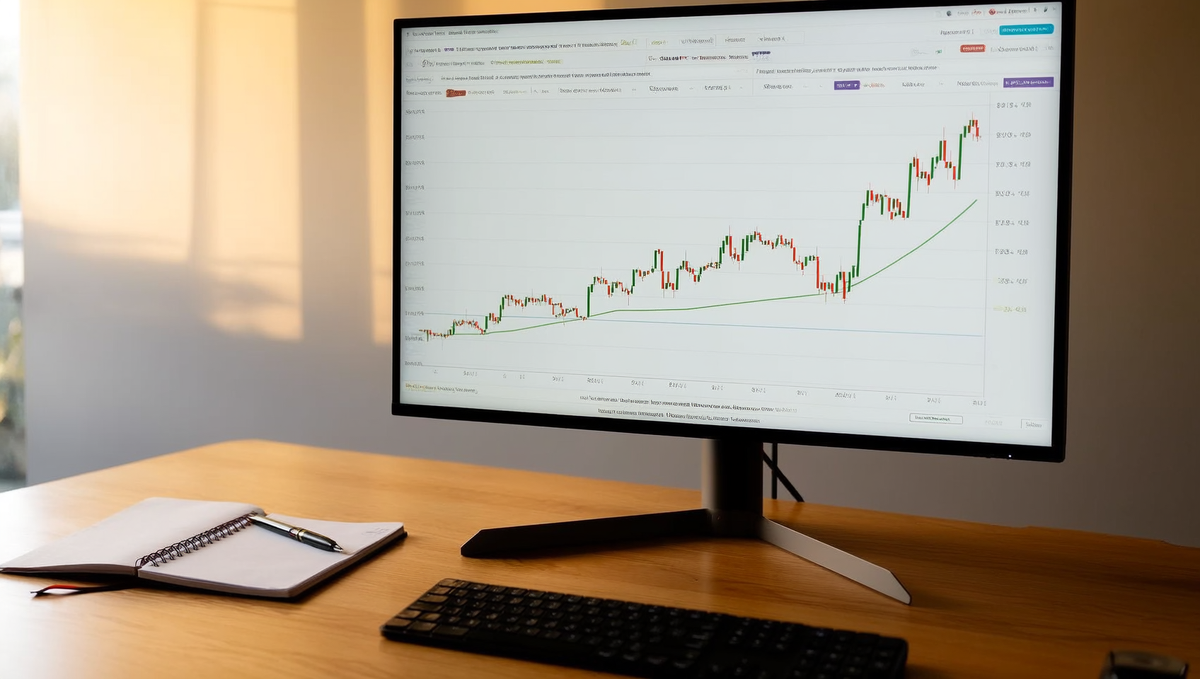
On For Traders, XAUUSD is the most-traded instrument on the platform, with US100 (NSDQ) close behind — which means the two biggest clusters of challenge accounts are sitting exactly where volatility does the most damage around scheduled news. Gold's ATR can expand several-fold in the minutes following an FOMC statement or NFP print. A stop sized off the calm, pre-event ATR gets blown through by slippage before the order even fills at your intended price.
Gold (XAUUSD) around FOMC and NFP: ATR expansion and slippage
Size your stop off post-event ATR, not the ATR you measured an hour earlier. If gold's 14-period ATR on the 5-minute chart is running 80 cents pre-release, don't be surprised if it's 3-4x that in the ten minutes after NFP hits the wire. A stop that felt reasonable at 9:29am can get sliced through spread-plus-slippage at 9:30am with zero room to react. The rule: no new gold entries inside the blackout window, and any open gold position gets flattened or hedged before the print — not managed through it.
US100 / NSDQ and the cash-open hour
Treat the first 15 minutes of the cash open as observation, not entry. US100 gaps and reprices violently as the opening auction absorbs overnight order flow — spreads widen, and the "obvious" breakout often reverses once liquidity normalizes. Wait for the opening range to establish, then trade the structure that forms after, not the noise that precedes it.
CME futures: tick value, basis and why size feels different
Futures prop trading is the fastest-growing segment on the platform, and that growth brings a literacy problem: a trader used to lot sizing in forex can badly misjudge risk in CME futures because tick value and contract size don't scale the same way. Check dollars-per-tick and total contract exposure before the order goes in, not after the fill.
| Instrument | Danger window | Rule |
|---|---|---|
| XAUUSD | FOMC / NFP ±15 min | Flat into the print; size stops off post-event ATR |
| US100 / NSDQ | First 15 min of cash open | Observe only, no market entries |
| CME futures | Any session | Confirm ticks and $/tick before sizing |
Step 6: Journal for psychology, not bookkeeping
A P&L log tells you what happened. A trading journal for psychology tells you what state you were in when you decided — and only the second one changes your behaviour. Most traders track entries, exits, and net result. That's accounting. It confirms you lost money; it doesn't tell you why you keep repeating the same mistake at the same point in your process.
The seven fields that actually change behaviour
Use this as a trading journal template — copy it into a spreadsheet and fill it every trade, not at the end of the week:
| Field | What it captures |
|---|---|
| Pre-trade state score (1–10) | How calm/focused you were before clicking buy or sell |
| In written plan? (Y/N) | Was this setup defined before you saw the chart today |
| Risk used vs risk planned | 0.5% planned, 1.2% used — that gap is the tell |
| Emotion at entry | One word: bored, revenge, confident, anxious |
| Emotion at exit | Same, taken right after you close |
| Did you move the stop? | Y/N — and by how much |
| Left-alone outcome | What price actually did if you'd done nothing |
That last field is the one people skip and the one that hurts most. Screenshot the chart four hours later. If price hit your original target after you'd already moved the stop and got stopped out, that's not bad luck — that's a rule you need to fix.
Scoring rule adherence separately from P&L
This is the hardest habit in prop trading psychology, and it's the one that separates traders who pass from traders who cycle through evaluations. Score every trade on a rule adherence score out of 10 — completely independent of whether it made money. A trade taken exactly to plan that stops out for a loss scores 9 or 10. A trade outside your plan that happens to print a winner scores 2 or 3, no matter the size of the fill.
Your brain wants to grade on outcome. Fight it. A high-adherence loser is a good trade executed in a losing market. A low-adherence winner is a coin flip that got lucky, and if you keep grading it a success, you're training yourself to repeat the exact behaviour that eventually blows the account.
The weekly review: one pattern, one rule change
Once a week, read the journal back — don't just glance at the win rate. Look for one repeating pattern: maybe every low-adherence trade happened after 2pm, or every moved stop followed a pre-trade state score under 5. Find it, name it, and change exactly one rule to address it. Not three. One.
Traders who try to overhaul everything at once end up with a rulebook they can't hold under pressure. Traders who fix one leak a week, every week, end up with a process that's actually theirs — tested against their own data, not copied from a forum post.
Step 7: Trade the drawdown, the deadline and the restart after a fail
When you're deep in drawdown mid-challenge, the correct adjustment is downward — halve your risk to 0.25–0.5% per trade, cap yourself at two trades a day, and shift your target from "hit the profit number" to "don't break a rule" until equity stabilises. This is how prop traders manage stress in the moment it actually costs money: they change the size of the bet, not the size of the story they tell themselves about the bet.
Deep in drawdown mid-challenge: halve risk, don't double it
The instinct under a trailing drawdown is to swing bigger to make it back fast. That's exactly backwards. If you're three losing trades into a Two-Step Challenge and sitting near your daily loss limit, halving size does two things: it buys you more attempts before you touch the floor, and it removes the temptation to revenge-trade a single setup back to breakeven. Mental resilience trading isn't about forcing a comeback — it's about surviving long enough for your edge to show up again over a larger sample. A trader risking 0.25% needs four losers in a row to feel what a 1%-risk trader feels in one.
Days left on the clock: why the deadline is the biggest emotional driver
Ask any evaluator what blows accounts in the final week and the answer is almost never a bad setup — it's a good trader with three days left and a target still 4% away. That deadline pressure is the single biggest driver of oversized trades in evaluations. The fix isn't a mindset trick, it's an acceptance: a reset costs a fee, a blown account costs the routine, the journal streak, and the confidence you built over the weeks before. Prop firm challenge stress peaks exactly when the calendar and the P&L disagree — plan for a reset as an acceptable outcome before you're staring at day 28, not after.
Rebuilding after a failed evaluation without going bigger
Before you buy another attempt, open the journal from the failed run and separate edge from execution. Did the setups actually not work, or did you skip the stop twice under FOMC volatility? Those are different rebuilds. If it's execution, restart on the same risk numbers — same 0.5%, same daily cap — on a fresh Two-Step Challenge or Instant Funding account; sizing up to "make it back faster" is how one failure becomes three. If it's edge, that's a strategy problem, not a courage problem, and no amount of size fixes it.
High evaluation failure rates are industry-standard — the traders who pass consistently are the ones whose rules were written before the pressure arrived, not improvised during it. If you're rebuilding solo, the For Traders Discord community and the platform's educational resources exist for exactly this stretch: accountability from people who've reset before, not just performance rewards to chase after.
Ready to trade funded capital?
Choose your path — Instant Accounts, One-Step or Two-Step Challenges — from just $23, with up to $300,000 in funded capital.
Choose your challengeFrequently Asked Questions
How do prop traders manage stress day to day?+
Prop traders manage stress by treating risk parameters as fixed rules, not daily decisions — the calculation happens before the session, not during it. A typical routine includes a pre-market check of news and levels, a fixed risk-per-trade (often 0.5-1%), a hard daily loss limit that ends the session automatically, and a post-session journal entry logging emotional state, not just P&L. The stress comes from uncertainty; the fix is removing as many in-the-moment decisions as possible so tilt has less room to operate.
Why is prop trading more stressful than trading your own account?+
Prop trading adds structural pressure that personal accounts don't have: a daily loss limit, a max/trailing drawdown ceiling, and a target deadline all stacked on top of normal market risk. On your own account, a bad week just costs money. In a Challenge, a bad week can end the evaluation entirely, which turns ordinary drawdown into an existential threat and pushes traders toward over-tightening stops or chasing the target — both of which increase failure risk rather than reducing it.
What are the warning signs of tilt in trading?+
Tilt shows up physically and behaviourally before it shows up in your P&L — tight jaw, faster clicking, widening your stop after entry, or sizing up right after a loss to "get it back." The moment you notice one of these, the correct move is to close the platform, not adjust the trade. A hard rule like "two losses = done for the day" removes the decision from a compromised mental state, which is exactly when you shouldn't be trusted to make it.
How much should you risk per trade to stay emotionally stable?+
Most traders who survive a losing streak without panicking risk 0.5-1% of account balance per trade, sized so that five losses in a row barely dents the daily loss limit. Risk that feels fine on a winning trade often feels reckless three losses deep — that gap is the real test. If a normal losing streak (4-6 trades) makes you want to abandon your plan, position size is the first thing to cut, not the strategy.
How do you stop revenge trading after a stop-out?+
The only revenge-trading rule that reliably works is mechanical: a fixed cooldown (30-60 minutes minimum) or a hard stop after a set number of losses, enforced by closing the platform rather than willpower. Revenge trades are driven by the urge to fix the loss immediately, which almost always means bigger size and worse setups. Traders who hold their Challenge accounts long-term treat the cooldown as non-negotiable, the same way they treat the daily loss limit.
How do you trade FOMC and NFP without losing composure?+
The calmest approach is deciding your FOMC/NFP plan before the release — flat going in, reduced size, or sitting it out entirely — because spread widening and slippage on gold and US100 during these windows make normal stop placement unreliable. Traders who stay composed treat high-impact news as a scheduled event to plan around, not something to react to live. If you do trade it, size down hard and accept wider stops rather than fighting the initial spike.
How do you handle being deep in drawdown mid-Challenge?+
The move is to hold your existing risk per trade, not tighten it or loosen it, because both reactions come from emotion rather than edge. Tightening stops after a drawdown usually just gets you stopped out more often on normal noise; increasing size to "catch up" turns a manageable drawdown into a blown account. Traders who recover from drawdown do it by running their normal process for more trades, not by changing the process under pressure.
Does trading simulated capital change trading psychology?+
Simulated capital changes what you're afraid of losing but not the pressure you feel, because the daily loss limit and drawdown rules still end your evaluation in the same way real losses would. Some traders find they take worse risks on simulated funds precisely because "it's not real money," which is why treating the Challenge account with the same discipline as a live account is the actual skill being tested — not the P&L itself.
Written by
Lenka Rož Schánová
Operations & Risk, For Traders
Lenka focuses on the operational and risk side of running a prop trading firm — the rules behind evaluations, why drawdown limits exist, and the patterns that distinguish traders who pass from those who don't. She writes for traders who want to understand the framework they're trading inside, not just the markets they're trading.
Follow on LinkedInReady to trade funded capital?
Choose your path — Instant Accounts, One-Step or Two-Step Challenges — from just $49, with up to $300,000 in funded capital.
Choose your challengeTrade up to $300,000
Choose challenge